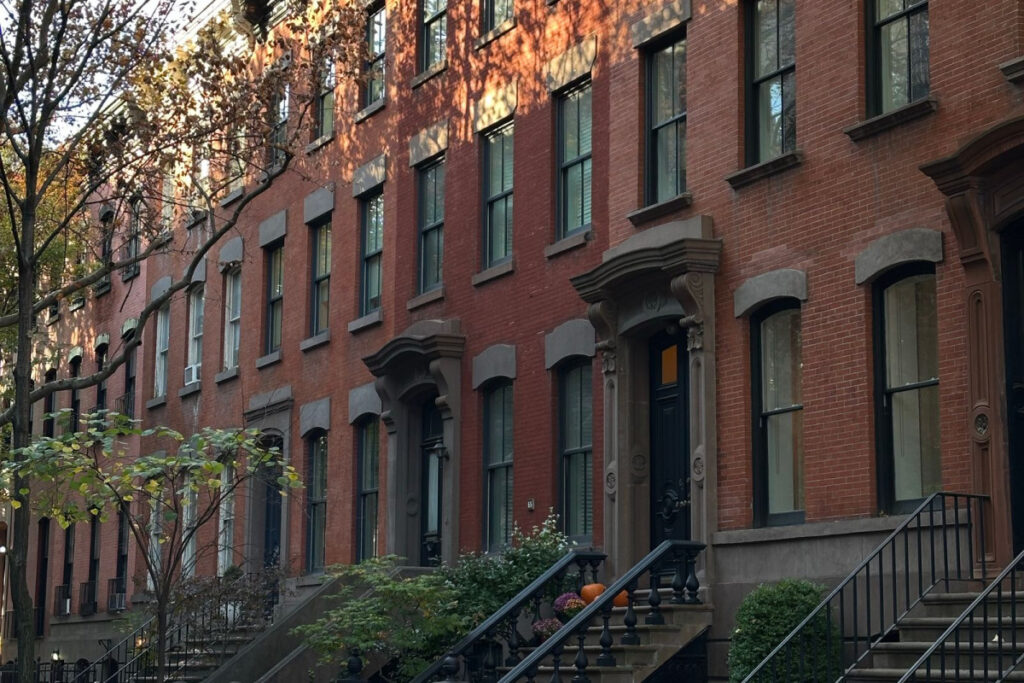
Washington Heights and Inwood sit at the northern tip of Manhattan, a stretch of the island defined by steep hills, prewar apartment houses, and a skyline shaped by Fort Tryon Park rather than glass towers. It is also one of the last parts of Manhattan where walk-up buildings still outnumber elevator buildings by a wide margin. For residents on the fourth or fifth floor, that character comes with a real cost: hauling heavy laundry bags down four flights of stairs, across busy streets like Broadway or St. Nicholas Avenue, and into a laundromat, then back up again a few hours later.
The Walk-Up Reality Above 155th Street
Ask anyone who lives north of 155th Street about laundry day and the conversation turns to stairs. Washington Heights alone has roughly 486 rental buildings that include walk-up units, many of them prewar structures built long before elevators became standard equipment in residential construction. Under the New York State Multiple Dwelling Law, a residential building was only required to install a passenger elevator once it exceeded six stories or sixty feet in height, so the five-story tenements and prewar apartment houses that line blocks like Wadsworth Avenue, Fort Washington Avenue, and the stretch of Broadway near the George Washington Bridge were built entirely to code without one. Decades later, residents on the top floors are still climbing, and a full basket of wet towels or bedding is no small thing to carry down a narrow prewar stairwell.
Why In-Building Laundry Rooms Are Rare Uptown
Newer developments in Midtown or along the Hudson Yards corridor often build a shared laundry room into the basement or ground floor. Prewar buildings in Washington Heights and Inwood rarely had that option, since many were converted from row houses or built as modest rental housing decades before in-building laundry became a standard amenity. Basement space that might otherwise hold washers and dryers is frequently taken up by boiler rooms, storage, or superintendent units instead. That leaves residents choosing between a walk to one of the neighborhood laundromats on Broadway or Dyckman Street, or a service that comes to the building lobby and skips the stairs entirely.
How Pickup and Delivery Solves the Stairs Problem
A pickup and delivery service removes the physical burden completely. Instead of carrying bags down four or five flights, residents leave laundry with the doorman, in the lobby, or just inside the apartment door at a scheduled pickup window. Clean laundry is washed, dried, and folded off site, then returned within 24 to 48 hours depending on the plan chosen. Our Washington Heights wash and fold service was built around exactly this kind of building stock, with route drivers who already know which walk-ups on Bennett Avenue or Cabrini Boulevard have narrow vestibules and which buildings prefer a buzzer instead of a super holding the bag. Full details on scheduling, turnaround, and pricing are covered on our how pickup and delivery works page.
Serving the Families and Students of Washington Heights and Inwood
Washington Heights and Inwood are home to a dense mix of multigenerational Dominican and Latino households, Yeshiva University students, and staff who keep irregular shifts at NewYork-Presbyterian and Columbia University Irving Medical Center nearby. Each group has a different laundry problem. Families juggling school schedules and two working parents rarely have a free weekday afternoon to sit in a laundromat. Hospital staff working overnight shifts need a service that does not depend on being home during business hours. Students living in shared apartments need wash and fold that keeps pace with the volume of a full household. A route-based pickup and delivery model with a flexible pickup window works for all three without requiring anyone to rearrange a whole day around laundry.
What Happens Once You Book a Pickup
Booking starts online or by phone with an address and a preferred pickup window. On pickup day, bags are weighed or sorted by load, and any special instructions, such as keeping a delicate sweater separate or using a fragrance-free detergent, are noted before anything goes into a machine. Clothing is washed at the appropriate water temperature and cycle for the fabric, dried, and folded, then returned in the same window on the agreed delivery day. For dry clean only items such as wool coats, suits, or eveningwear that need pressing rather than washing, items are routed instead through our professional dry cleaning service, which handles delicate fabrics separately from the wash and fold line.
Caring for Delicate and Professional Garments
Care labels exist for a reason. Under the FTC Care Labeling Rule, manufacturers are required to attach instructions describing the regular care a garment needs, whether that means machine washing, hand washing, or dry cleaning only. Ignoring that label on a wool blazer or a silk blouse is one of the fastest ways to shrink, fade, or otherwise ruin a piece of clothing. The Drycleaning and Laundry Institute publishes consumer-facing care guidance that lines up with what professional cleaners already practice: sorting by fabric and color, treating stains before washing rather than after, and using the gentlest cycle a garment can tolerate. A pickup service that reads labels and sorts accordingly protects clothing that a rushed laundromat visit might not.
The Water and Time Savings of Professional Laundry
Beyond convenience, professional laundering tends to be more resource efficient than a string of individual trips to a laundromat. The EPA WaterSense program notes that washing only full loads and selecting a cold water cycle when possible are two of the simplest ways to cut water and energy use at home. Commercial grade washers used by pickup and delivery services are generally more efficient per pound of laundry than older laundromat machines, which means fewer wasted cycles and less water used to clean the same number of towels, sheets, and clothes each week.
A Neighborhood Built for Pickup and Delivery
Washington Heights and Inwood were built at a different scale and a different era than the elevator buildings farther downtown, and laundry service should reflect that. The same walk-up challenge shapes daily life in nearby Harlem, and our guide to laundry pickup and delivery in Harlem covers many of the same building types just a few neighborhoods south. Whether the destination is a fifth-floor walk-up on Fort Washington Avenue or a doorman building near Fort Tryon Park, scheduling a pickup means one less flight of stairs to climb with a heavy bag of laundry.